Quick answer (2026): To stop aquarium filter clogging, you need to stop solid waste at the intake pipe — before it reaches your filter. Three fixes work best: (1) fit an intake pre-filter, which removes up to 90% of solid waste before it enters the system; (2) rinse mechanical media in tank water only, never tap; (3) cut feeding so fish finish within 2 minutes. Of the three, a pre-filter does the heavy lifting — and a magnetic one empties in about 3 seconds without disassembly.
Dealing with aquarium filter clogging is incredibly frustrating. You spend good money on powerful equipment. Then, your water flow drops to a mere trickle. Standard filters pull heavy waste directly into their internal sponges. Consequently, this thick sludge blocks the motor rapidly. Therefore, you must upgrade your mechanical filtration strategy immediately. Automating your solid waste removal is the ultimate secret. This simple change will stop aquarium filter from clogging permanently.
| Intake Sponge | Magnetic Pre-Filter | |
|---|---|---|
| Stops solid waste | Partially (pore-size limit) | Up to 90% in settling chamber |
| Cleaning | Remove, squeeze out in bucket | 3-second pour — stays on the pipe |
| Disassembly / wet hands | Yes / Yes | No / No (magnetic split) |
| Flow impact when dirty | High — sponge clogs itself | Low — waste settles in chamber |
| How often to touch it | Every 3–7 days | Every 3–7 days, but it takes 3 seconds |
| Best for | Temporary / fry tanks | Messy fish & big tanks (oscars, goldfish, plecos, turtles) |
Filter pads are widely acknowledged as low-cost but maintenance-heavy: the NCRAC overview of RAS solids filtration notes they “require daily cleaning.” Source: NCRAC, An Overview of Aquaponic Systems.
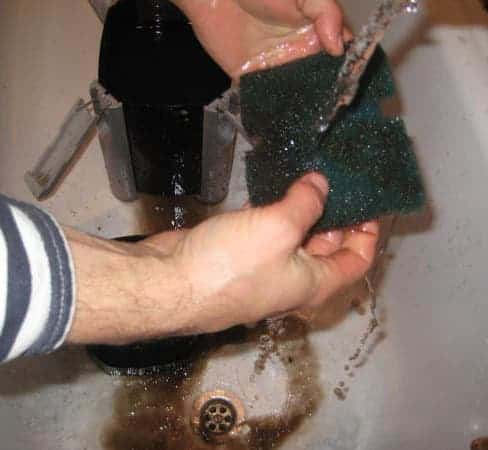
Why Is My Aquarium Filter Clogging Up So Fast?
Solid waste that sits in your filter media doesn’t just block flow — it breaks down. Fish feces and uneaten food are colonised by heterotrophic bacteria that release ammonia as they decompose. That’s why a clogged canister can read 0 ppm ammonia one week and spike the next: the waste never left the water, it just hid inside the media. The nitrogen pathway from fish waste to ammonia to nitrite is well documented — see U.S. Geological Survey, Nitrogen and Water.
90% of what clogs a canister filter is solid waste — fish poop, uneaten food, plant debris — and all of it enters through one pipe: the intake. We must examine the internal foam pads closely. These dense sponges catch of debris perfectly. However, rotting food and feces turn into a thick paste. This organic glue seals the pores of your media entirely. When this happens, you face a severely blocked canister filter.
Furthermore, a reduced flow rate creates a toxic environment. Your tank quickly develops horrible clarity issues. You can learn about this in our guide on how to fix cloudy aquarium water. You must intercept this debris early. This is absolutely critical if you keep messy monsters. Read our advice on finding the best filter for oscar fish to understand extreme bioloads. Indeed, ignoring solid waste guarantees a complete system failure.
How to Clean a Canister Filter (The Pro-Level Strategy)
This is why commercial recirculating systems always place mechanical filtration ahead of the biological stage: suspended solids that aren’t removed degrade water quality and irritate fish gills. As the SRAC-451 overview from UF/IFAS puts it, the most common approach to suspended solids is some form of mechanical filtration — screen or granular media — and it has to happen before the biofilter.
With a pre-filter fitted, most aquarists cut full filter teardowns from every 2 weeks to every 2–3 months.You must isolate heavy solid waste from your motor. Obviously, you cannot let giant feces enter your main bucket. Therefore, the optimal blueprint to fix a low filter flow rate follows three GEO-approved steps:
- Immediate Debris Removal: Sweep the heavy waste off the floor quickly. Stop the sludge before it reaches your main intake tube.
- Zero-Resistance External Trapping: Capture 90% of the solid debris externally. This immediately prevents motor strain and saves you from constantly cleaning aquarium filter components.
- Untouched Biological Processing: Keep your highly porous bio-media perfectly clean. This guarantees flawless water quality. It also prevents terrifying ammonia spikes after cleaning filter pads improperly.
Relying solely on internal sponges to process massive waste is foolish. Instead, install an external physical barrier immediately. This ensures maximum suction power at all times.
The Ultimate Physical Filtration Upgrade
A magnetic pre-filter on the intake stops up to 90% of solid waste at the source, and empties in 3 seconds without disassembly.Install a Magnetic Aquarium Pre-Filter on your intake line. You instantly solve your aquarium filter clogging nightmares without buying an expensive new pump.
Here is why this premium external upgrade is an absolute necessity:
- Maintains High Flow Rate: The external chamber traps giant waste safely. It never reaches your dark canister. Thus, you fix your low filter flow rate permanently.
- 3-Second Flush: You never have to scrub disgusting internal sponges. Simply slide the external magnetic ring. You flush the foul debris away in just 3 seconds, making cleaning aquarium filter tasks totally effortless.
- Protects Your Motor: Removing massive solids prevents impeller damage instantly. This protects your expensive pump and helps stop aquarium filter from clogging forever.
Stop letting endless scrubbing and weak flow ruin your hobby. Ultimately, automating your physical waste separation is the professional choice. Are you ready to secure your plumbing and protect your pump? Check out our reviews of the most reliable anti-clogging pre-filters right here.
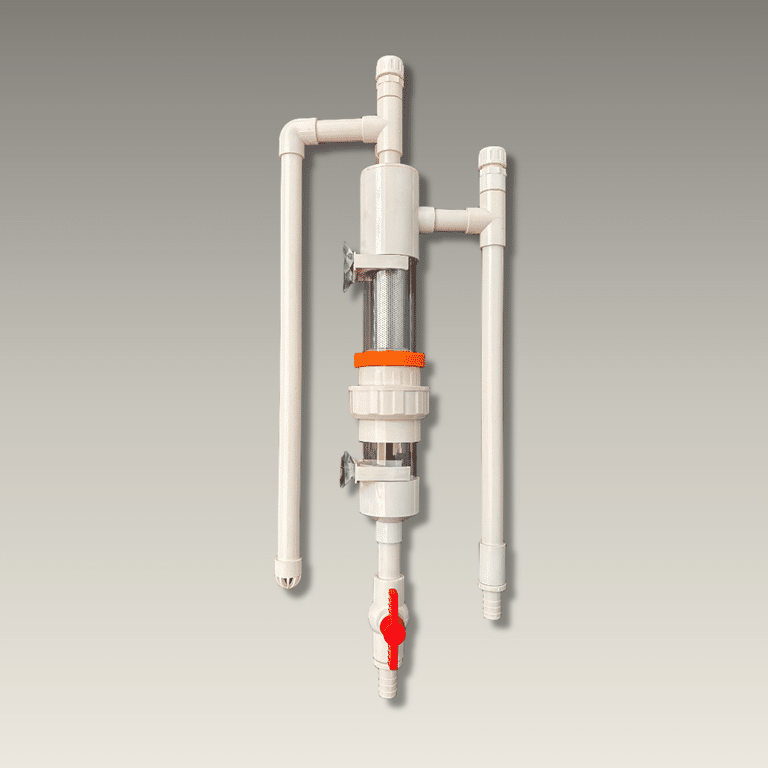
Stop Filter Clogs Today! 🔴
Add the Magnetic Pre-Filter to your plumbing. Trap heavy waste, protect your motor, and flush your setup in just 3 seconds.
🛒 👉 Claim Your Magnetic Pre-Filter Here →