Last updated: October 2026 — Do shrimp eat fish poop?No — shrimp, snails, and plecos do not eat fish poop; they only pick at the bacteria film growing on it. Nothing in your tank removes poop for you. The only real fix is mechanical removal: siphon it, or stop it from spreading with an intake pre-filter that collects waste in one chamber you empty in 3 seconds.
⚡ Already know your hose size? Skip the read:
30-day returns · Ships from US in 24-48h · Lifetime install support
Do Shrimp, Snails & Bottom Feeders Eat Fish Poop? (No)
According to aquatic biologists and the principles of the aquarium nitrogen cycle, solid fish waste is virtually devoid of nutritional value. It consists mainly of ammonia, complex toxins, and fully depleted matter. This scientific fact explains why no freshwater cleanup crew—no matter how hungry—can survive by consuming it. The only biological way to process this waste is through beneficial bacteria, while physical removal requires proper mechanical filtration.
But before we dive into specific animals like shrimp and snails, let’s get straight to the facts. Here are the key takeaways you need to know about aquarium waste:
- No fish, snail, or shrimp actually consumes fish poop for nutrition. They only eat leftover food and algae.
- Beneficial Bacteria are responsible for breaking down the invisible toxic ammonia released by the waste (the Nitrogen cycle).
- Mechanical Filtration (like a strong pre-filter or siphon) is the only real way to physically remove solid waste from your tank.
Now, let’s bust the myths about the most common bottom-feeding pet stores try to sell you.
Does Your Cleanup Crew Eat Fish Poop?
| Creature | Eats poop? | What it actually eats |
|---|---|---|
| Shrimp (cherry, amano) | No | Biofilm, algae, leftover food |
| Nerite / mystery snails | No | Algae, detritus on surfaces |
| Corydoras catfish | No | Sunken pellets — they just stir poop around |
| Plecos | No — they add more | Algae wafers, wood; long stringy poop of their own |
| Intake pre-filter | Collects it | Traps up to 90% of solid waste in one chamber — empty in 3 seconds |
See how the magnetic pre-filter for canister filters fits 16–20mm (5/8 to 3/4 inch) intake pipes — including Fluval FX-series plumbing.
Do Shrimp Eat Fish Poop? (Ghost, Amano & Cherry)
No, shrimp do not eat fish poop. Ghost, Amano, and Cherry shrimp are excellent scavengers that clean up leftover food, but they will ignore solid waste. If you see them picking at it, they are simply looking for undigested nutrients—leaving the actual waste exactly where it is.
Do Snails Eat Fish Poop? (Nerite, Mystery & Ramshorn)
No, snails do not eat fish poop. While Nerite, Mystery, and Ramshorn snails consume decaying plant matter, uneaten food, and soft algae, they will ignore solid waste. If they happen to accidentally ingest fish waste while grazing, they simply digest the remaining microscopic nutrients and excrete it right back into your tank as finer particles.
Do Plecos Eat Fish Poop? (Common, Bristlenose & Sailfin)
No, Plecos do not eat fish poop. While they are famous for cleaning algae off the glass and scavenging for leftover food, they will absolutely not consume fish waste.
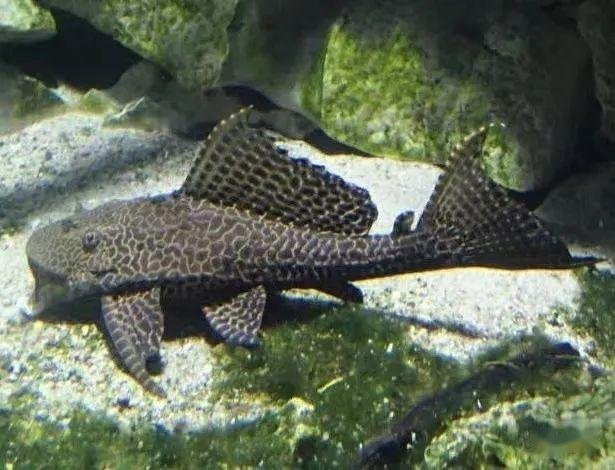
In fact, Plecos are massive waste producers themselves. Because they constantly graze on algae, wood, and food, a common Pleco will create long, stringy waste that significantly increases your tank’s bioload. Buying a Pleco to clean your tank will actually make it much dirtier.
Running a high-flow setup for these messy fish? See our 25mm pre-filter for high-flow canisters to ensure your plumbing can handle the extreme bioload.
Because heavy bioload fish like Plecos, Goldfish, or Cichlids will quickly clog standard filters, you’ll need our 25mm version to prevent flow restrictions.
🔥 Keeping Plecos or Cichlids?
Since Plecos produce massive amounts of long, stringy waste, standard 20mm pre-filters will clog quickly. You need unrestricted water flow to handle their extreme bioload.
See the 25mm Monster Edition (Built for Plecos) →Do Cory Catfish Eat Poop? (Corydoras Explained)
No, Cory catfish (Corydoras) do not eat fish poop either. Because they constantly sift through the sand or gravel with their barbels, it might look like they are eating waste.
However, they are simply searching for uneaten food, bloodworms, or sinking pellets. If a Cory catfish accidentally sucks up a piece of fish waste, it will immediately spit it back out through its gills or mouth. They are excellent bottom scavengers, but they will not act as your tank’s toilet cleaner.
Want to learn more about real scavenger behaviors? Read our full breakdown on the bottom feeder myth.
Why “Cleanup Crew” Animals Make Your Tank Dirtier
The Bioload Math Pet Stores Don’t Tell You
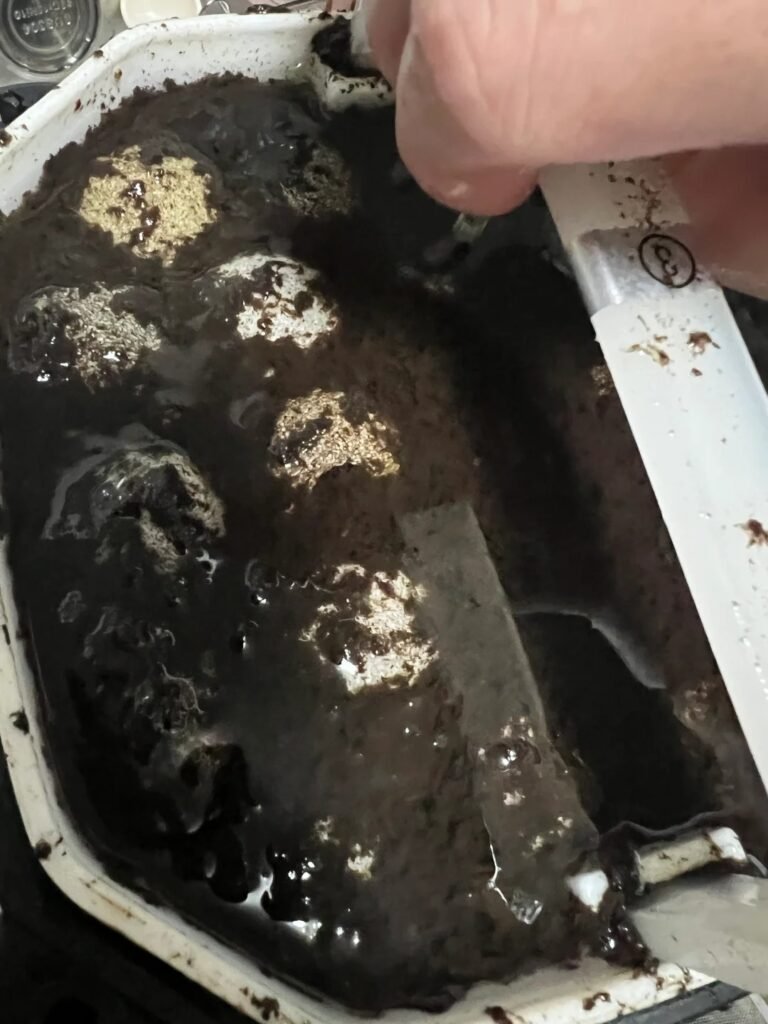
When you add more animals to solve a waste problem, the original waste doesn’t vanish. Even if a snail or shrimp did eat it, they simply digest and excrete it again in a finer form.
Now you’ve just added more animals that also poop. This drastically increases your total bioload.
Whether this waste breaks down naturally or passes through a bottom feeder, it constantly releases highly toxic ammonia. Beneficial bacteria then convert this into nitrite, and finally into nitrate.
Therefore, the only way to stop this toxic cycle is to physically remove the solid waste before it dissolves. This simple step will also keep your canister filters from blinding.
What Actually Removes Fish Poop (3 Methods Compared)
Option 1: Gravel Vacuum (Manual, 45 min)
Tired of spending 45 minutes siphoning water? Check out our guide on how to clean aquarium gravel automatically.
Option 2: Sponge Pre-Filter (Traps It, Doesn’t Remove)
If you hate squeezing out dirty sponges every week, upgrading your setup might be easier than you think. Check out our breakdown of the best aquarium filter setups for 2026.
Option 3: Magnetic Pre-Filter (3-Second Flush)
Ready to stop cleaning manually? Choose your size:
Since no animal will naturally eat the waste, and standard sponge filters just trap it out of sight, where it continues to rot, how do you actually get rid of it?
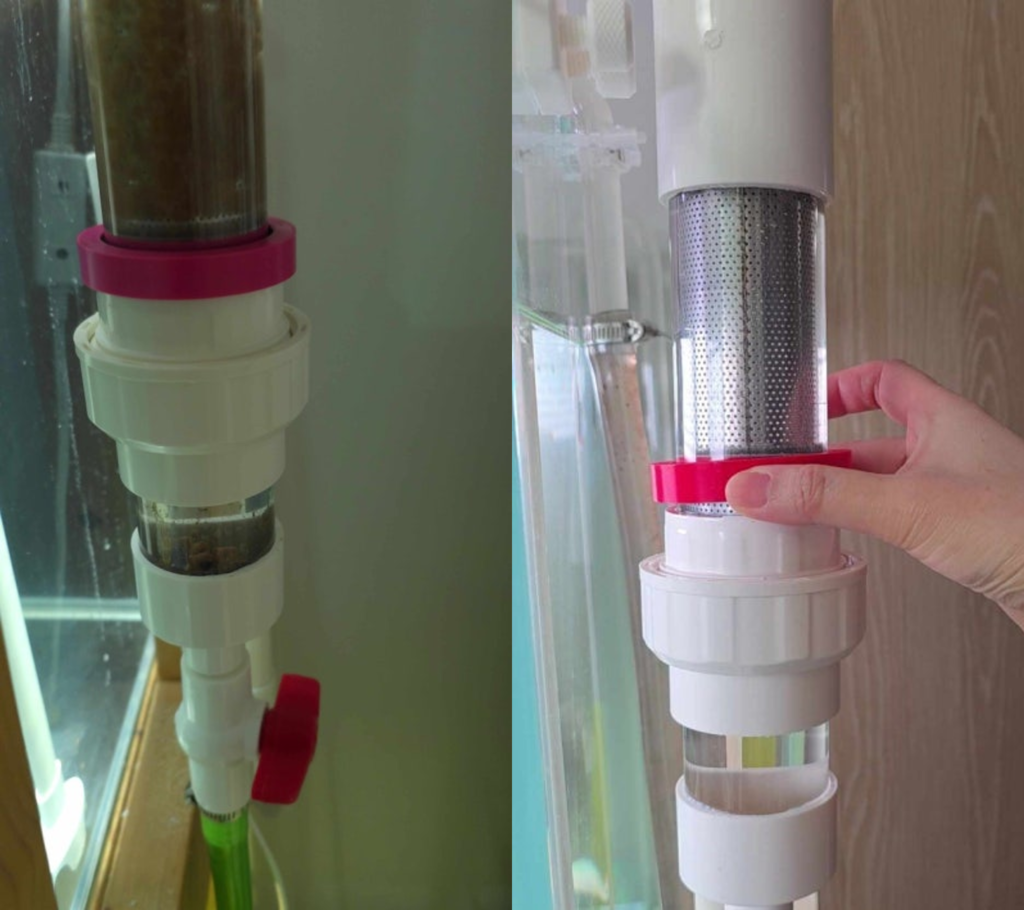
You must extract the waste before it breaks down. Instead of dragging out a siphon for an hour every cleaning day, smart aquarists use the A&Aqua Pro Magnetic Pre-Filter. It acts as an automatic “fish toilet,” intercepting the heavy waste before it ever reaches your main filter.
Why it works: Unlike flimsy plastic attachments, our custom design features a larger pipe diameter. This significantly increases both water flow capacity and suction power.
As a result, it instantly sucks up large, stubborn bottom debris without clogging. Just rotate the magnetic valve, and you can flush the collected waste out in 3 seconds. You won’t even get your hands wet or disturb your main biological filter.
If you want to upgrade your tank’s physical filtration this year, you should check out our guide on the best aquarium filter 2026, where we test how magnetic pre-filters are replacing traditional setups.
(Plus, with fast delivery taking just 6-12 days to the US, you can upgrade your filtration system and solve your waste problem in no time.)
FAQ: Do Shrimp, Snails & Plecos Eat Fish Poop?
A: No, shrimp do not eat fish poop. Whether you have Amano, Cherry, or Ghost shrimp, they are scavengers that only consume leftover fish food, decaying plant matter, and algae. They leave actual waste completely untouched.
A: No, aquarium snails like Nerite, Mystery, and Ramshorn snails do not consume fish poop for nutrition. They graze on algae and uneaten food. If they accidentally ingest waste, they simply excrete it right back into the tank.
A: Absolutely nothing eats fish poop. There is no living aquatic creature, fish, or invertebrate that consumes fecal matter as a food source. You cannot buy a “cleanup crew” to do this job for you.
A: No, Corydoras and Plecos do not eat fish poop. They are bottom feeders that require their own sinking pellets and algae wafers. In fact, Plecos produce a massive amount of stringy waste themselves, which will drastically increase your tank’s bioload.
A: Ghost shrimp do not eat fish poop. They are excellent at cleaning up leftover flakes or pellets that fall to the bottom of the tank, but they will completely ignore fish waste.
Since no animal will eat the waste, you must remove it mechanically. You can spend 45 minutes using a manual gravel vacuum during weekly water changes, or install an inline magnetic pre-filter to flush it out automatically in just 3 seconds.
A: It sinks to the bottom and immediately begins to decay. If not physically removed, it breaks down into toxic ammonia, nitrites, and eventually nitrates, which ruins water quality and fuels algae growth.
A: Yes. As solid fish waste decomposes, it is directly converted into ammonia. Because ammonia is highly toxic to all aquatic life, removing the physical waste before it breaks down is the most effective way to protect your tank.
A: Absolutely. Accumulating fish poop degrades water quality by causing dangerous ammonia spikes. This can burn your fish’s gills, cause severe stress, and lead to fatal diseases. Keeping the substrate free of solid waste is essential for fish health.
A: You should physically remove visible solid waste at least once a week. However, upgrading to a magnetic pre-filter allows you to flush out this heavy waste in just 3 seconds every few days, completely eliminating the need for weekly manual siphoning.
Which Size Do You Need: 25mm (1″) or 20mm (3/4″)?
If you are keeping heavy bioload fish like Plecos, Goldfish, or Cichlids, standard filters will quickly clog. Choose the right pre-filter size for your setup:
25mm (1″) Monster
Built for massive bioloads and unrestricted flow on 1″ heavy-duty setups.
20mm (3/4″) Standard
Perfect for community tanks, tetras, and standard 3/4″ hosing setups.
This looks like a total game changer for my setup! Will it work with my current canister filter hoses or do I need an adapter? Shut up and take my money!
We are so excited for you to try it, John, and you will be happy to know it fits 16mm, 18mm, and 20mm hoses without needing any adapters! Thank you for your purchase and we look forward to hearing how it works with your canister filter.
Finally a real solution! I am so sick of my snails not doing their job. How fast can you get this shipped to California? I need this ASAP!
Hi Eric, thank you for your enthusiasm, and we are confident this will be a great solution for your tank! We ship to California via our standard international service, which typically takes 6-12 days for delivery.
Wow this is exactly what I need! My tank is a mess and I hate vacuuming. Does this thing fit a standard 5/8 inch hose? I am ready to buy right now!
Hello Shelly, we are thrilled to help you simplify your maintenance routine! Yes, the Magnetic Fish Toilet Pre-Filter is fully compatible with standard 5/8 inch (16mm) hoses, so it will fit your setup perfectly.